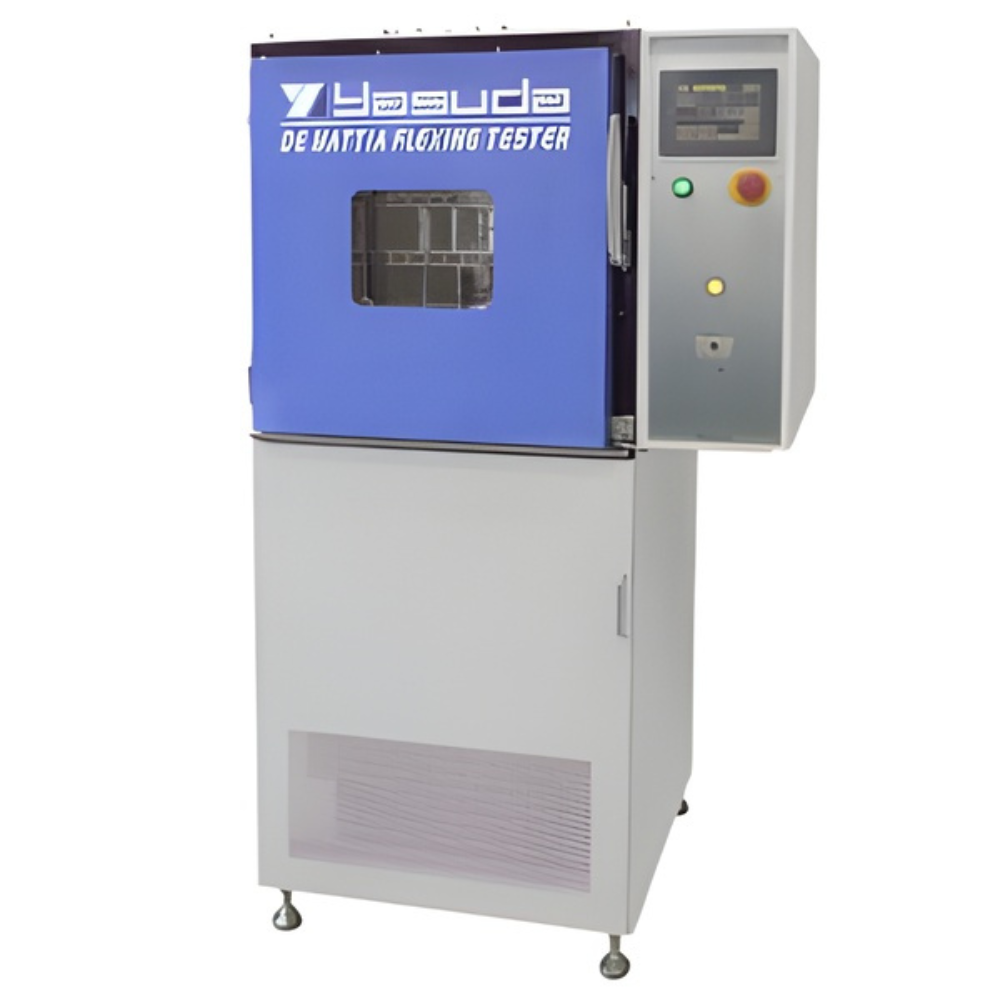
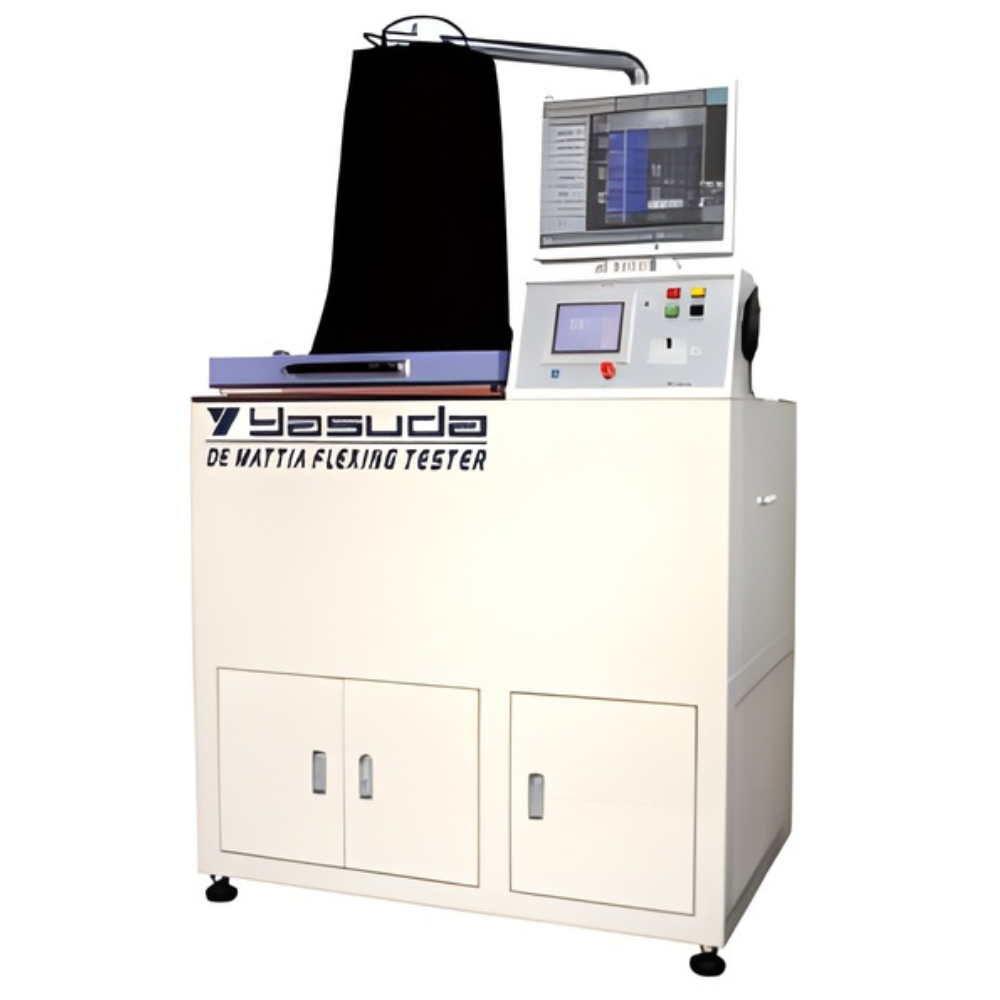
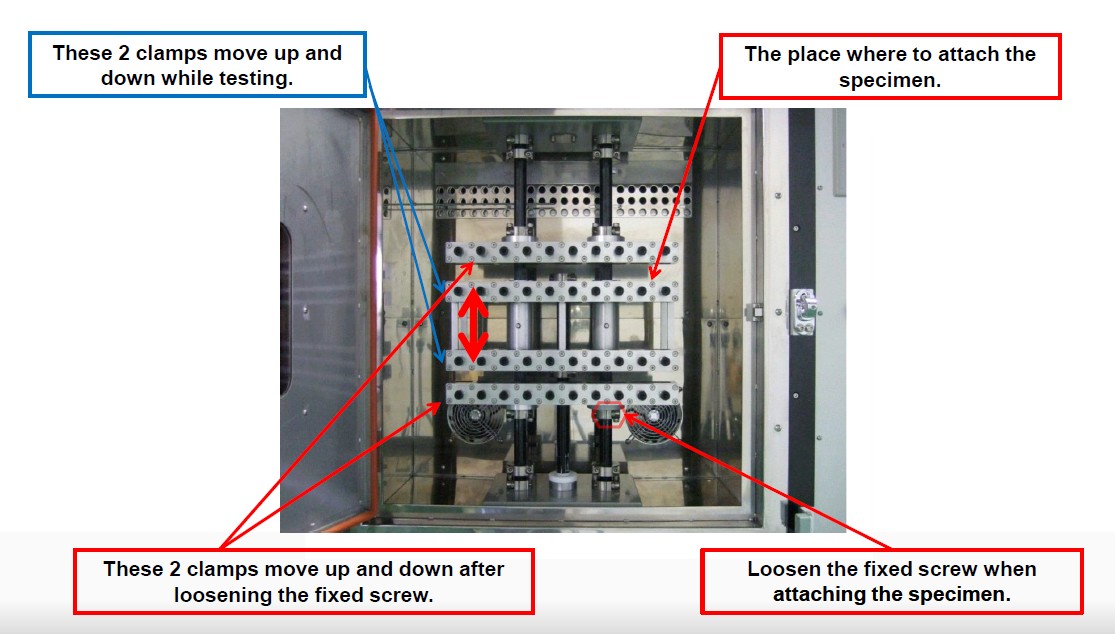
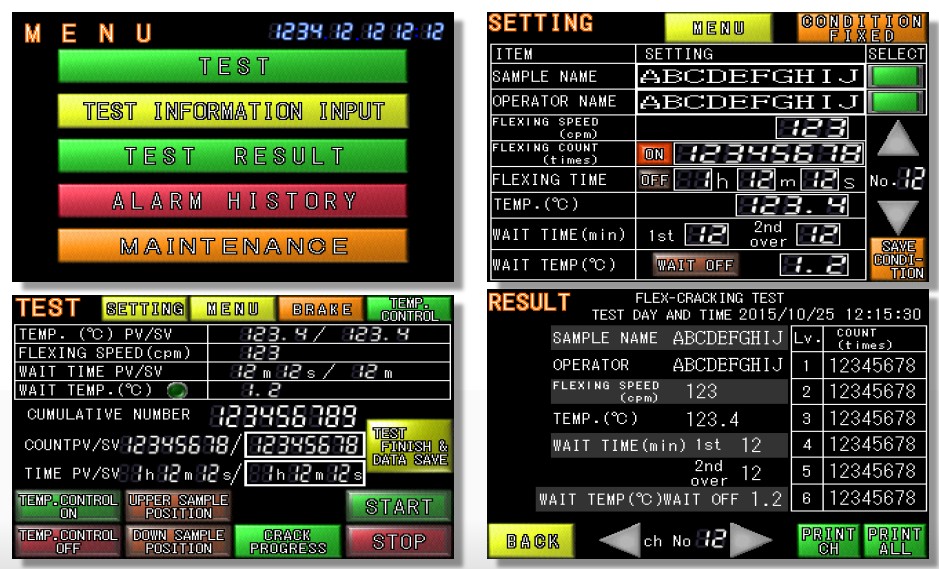
DE MATTIA FLEX-CRACKING AND CRACK GROWTH TESTER, Fatigue Crack Growth This is a test for material fracture caused by bending a specimen and studying crack growth to predict the service life of the material. When materials are subjected to uniform stress, study the fracture and damage of the specimen and predict the performance and service life at various times. According to JIS-K6260, ASTM D813, BS-903, and ISO 132 testing standards
Measurement to study the ability of materials to withstand stress until the workpiece develops damage (crack) as follows:
1.1 Initial crack is the number of cycles at which stress is applied until the first crack appears in the specimen. If the material can achieve a high number of cycles, it indicates that the specimen can be used for a long time and has high durability.
1.2 Crack Growth: Measurement of the expansion of a crack that occurs as a result of notching a test specimen.
1.3 Study of the durability of workpieces at various temperatures using a machine capable of adjusting the test temperature to examine the material structure and the impact of temperature factors on service life.
The figure shows the size of the crack as the number of load cycles increases.
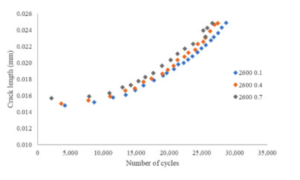
The test involves applying a constant force to repeatedly bend the specimen back and forth for a specified period. This causes fatigue in the tested area, resulting in fractures, cracks, defects, or micro-cracks on the rubber surface. These phenomena are caused by the uneven distribution of rubber chemicals or the presence of foreign particles. This is a key factor that causes rubber to fracture during use. When the rubber is bent or folded, the stress is distributed unevenly, resulting in high stress concentrations at the surface. Consequently, cracks form and propagate into the rubber material.
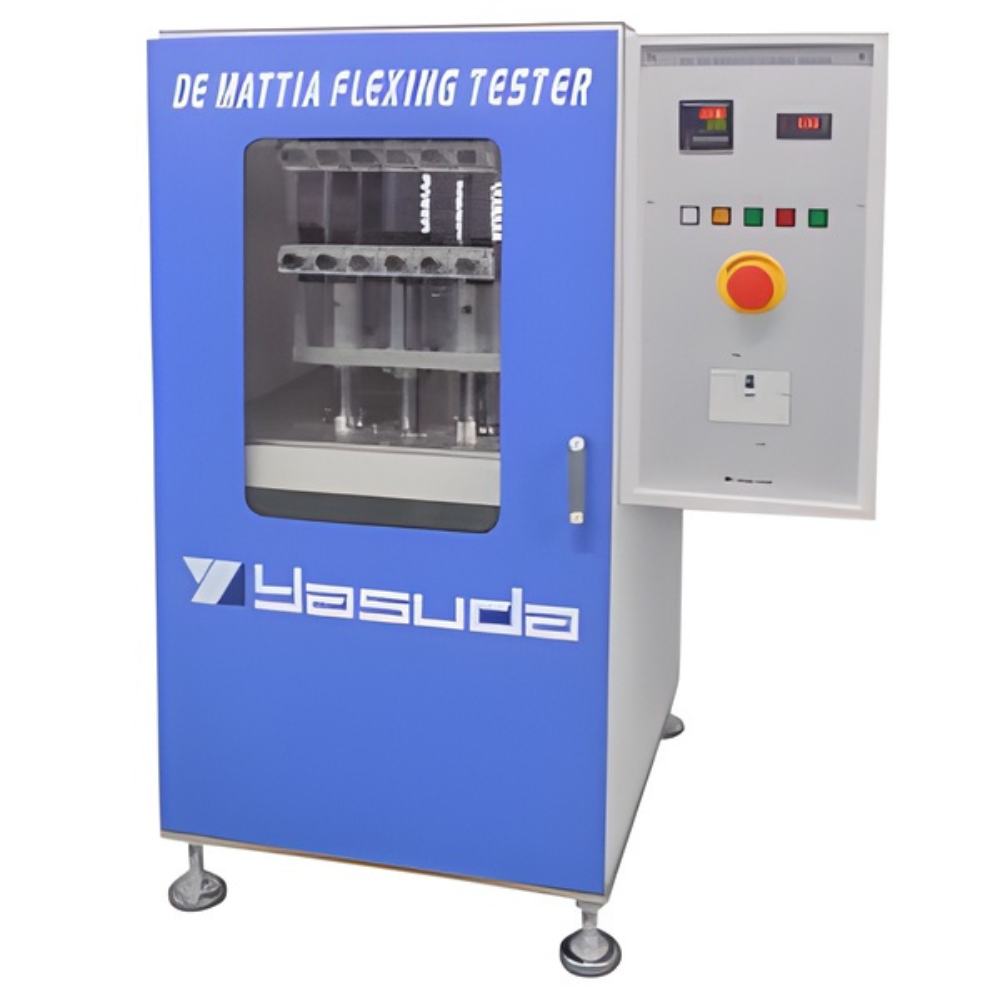
Figure showing the Dematteia tester according to ASTM D813 standard
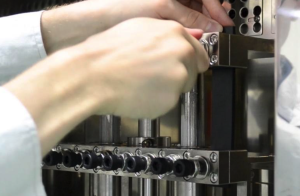
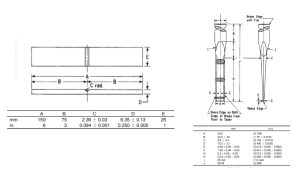
Preparation of a 25×150 x 6.35 mm² Charpy V-notch test specimen and notch machining. The flexural test is conducted at a frequency of 300 cycles per minute, with fracture originating from the notched semi-circular notch.
This figure shows the dimensions of the Dematteis test specimen and the sample notching equipment.
The test results indicate the number of bending cycles that cause cracking in the rubber at various levels according to standards, with values ranging from level 0 (no cracking) to level 10 (completely cracked). Additionally, this method can be used to test for expansion. The results from the test measure the size of the cracks as the width of the cracks when tested to a specified number of cycles, such as 10,000, 20,000, 40,000. 200,000 cycles or record the number of cycles that cause the crack to widen to 19 mm according to the ASTM D 813 standard method, etc.